Introduction
Global commerce survives thanks to payment rails that support cross-border payments. Financial institutions, companies, and other payment providers can transfer funds across the globe with ease.
The dominant system for these transfers is still SWIFT, an infrastructure established in the 1970s. However, emerging technologies, including blockchain and blockchain-based stablecoins, have also been adopted recently.
In this article, we take a more detailed look at stablecoins and SWIFT and their differences.
What is a stablecoin?
Stablecoins, as the name suggests, are a type of digital token currency designed to maintain a stable value. They are issued by private companies and exist on the blockchain. These digital assets are usually pegged to a fiat currency (typically the US dollar) and can also be backed by cash reserves and other high-liquidity assets. Some stablecoins may also be backed by other cryptocurrencies, such as Ethereum.
Issuers create new tokens against those reserves, a process our stablecoin minting guide walks through.
It’s important to note that stablecoins, unlike CBDCs (central bank digital currencies), are not legal tender. Depending on the coin, they fall under different regulations and scrutiny. Some of the most broadly used stablecoins include Tether (USDT), EUR CoinVertible (EURCV), and Circle (USDC).
Because that legal-tender line is the core divide, our cbdc vs stablecoin guide explains how central bank money differs.
Over the last few years, stablecoin payments have been gaining popularity as businesses use them to make high-value transactions. They are able to offer significant advantages compared to conventional banking methods, such as:
- Higher speed transactions
- Lower costs
- Access to newer markets
What is SWIFT?
Originally founded in 1973, SWIFT (Society for Worldwide Interbank Financial Telecommunications) is a global network that enables secure international transfers of money and other financial instruments. It connects over 11,000 financial institutions worldwide.
Under the SWIFT system, each institution is assigned a UIC (Unique Identification Code) to help ensure the security of transfers and payments. SWIFT also has massive political significance, playing a central role in transactions involving securities and trade, and is often a tool to enforce sanctions against other countries.
What are the key differences between stablecoins and SWIFT?
SWIFT and stablecoins can both benefit your business, depending on the characteristics that matter to you. Below, we break down the key differences between stablecoins vs SWIFT:
| Aspect | SWIFT | Stablecoins |
|---|---|---|
| Centralization | SWIFT is a centralized and heavily regulated network. | Stablecoins operate on decentralized blockchain-based networks and are used for transactions. |
| Time | SWIFT usually takes 1 to 3 days to settle payments. | Stablecoin typically settles within seconds to minutes, depending on the blockchain network |
| Costs | SWIFT is more costly because it involves more intermediaries, which may add fees. | Stablecoin payments involve fewer intermediaries, making them less expensive. |
| Accessibility | The access to SWIFT may be limited due to its reliance on traditional banking infrastructure. | Since these are digital tokens, stablecoins can be accessed anywhere in the world, regardless of access to banks. |
| Calendar | SWIFT relies on banking systems, meaning it operates according to regular bank holidays and work hours. | The digital nature of stablecoins means they can be operated across the globe 24/7, regardless of time and date. |
Speed of transactions: stablecoin vs SWIFT
Most SWIFT transactions take a long time to settle, with settlement times ranging from 24 hours to 5 business days or longer. This depends on the number of intermediary banks involved in the process, different time zones, compliance checks, and regulations in different areas.
On the other hand, stablecoin transfers are usually completed and settled within seconds to minutes. This decentralized blockchain-based system bypasses conventional clearing systems and banking networks, improving efficiency and cash flow for organisations.
Costs and fees comparison
Another major point of difference between these two payment methods is the costs involved. As we saw earlier, SWIFT payments frequently involve multiple intermediaries and their associated costs. These could include:
- Charges levied by the sending bank
- Charges levied by the receiving bank
- FX conversion rates
- Charges levied by any intermediary financial institutions
These costs tend to add up, drastically increasing the price of traditional transactions.
Stablecoins minimize these costs by conducting all transactions on the blockchain itself, decreasing the need for intermediaries. That is not to say they come without any costs. Depending on the network and infrastructure used, some blockchain-based transactions may cost less than 1% of the transaction value.
Costs shift with the chain you use, which our multi chain stablecoin guide breaks down.
Transparency and traceability
Another glaring difference between SWIFT and stablecoin payments is the traceability. Since all stablecoin payments are carried out on the blockchain, all transactions are permanently recorded on a public blockchain ledger. This allows for a verifiable, auditable trail, helping reduce reconciliation challenges common in international payments made with traditional systems.
Conversely, SWIFT payments pass through several different intermediaries. This reduces visibility regarding delays, processing steps, and additional fees. The audit trail can become unclear and muddled.
Settlement mechanisms
Another notable difference between SWIFT payments and stablecoin transactions is the settlement mechanisms they use:
Traditional SWIFT payments
SWIFT relies on traditional centralized payment rails to complete payments. These link together financial institutions, traditional banks, and other organizations worldwide. Utilizing globally recognized communication standards, SWIFT can allow your business to connect with other parties and intermediaries.
However, the settlement can often take time, with most payments taking 1 to 3 days to complete. Additionally, multiple intermediaries (brokers, asset managers, local agents, and more) are involved in the process, bringing up costs.
Stablecoin payments
Stablecoin, on the other hand, executes payments directly on a decentralized blockchain network. The blockchain serves as the settlement and execution environment, keeping a record of each transaction and acting as a ledger of payments.
Those involved initiate the payment by sending stablecoins from a digital wallet, and each transfer represents the exact amount. Since most stablecoins are pegged to a fiat currency 1:1, prices are more stable.
Cross-Border payments: pros and cons
Both SWIFT and stablecoins play a central role in international transactions, and each has its own advantages and disadvantages. It’s important to understand the pros and cons of SWIFT vs stablecoins to make an informed decision about which to use.
SWIFT
SWIFT delivers several benefits, including:
- Reliability: SWIFT payments are often completed within a few days. Their platform is encrypted and secure, making sure that transaction details are always confidential. Following the Bangladesh Bank Heist in 2016, SWIFT improved its security systems and ensured that your transactions continue to be safe.
- Worldwide accessibility: SWIFT is a decades-old system that is almost universally accepted, connecting more than 11,000 institutions across 200 countries. It offers exceptional reach for companies.
However, some challenges of using SWIFT include:
- Transaction costs: One of the biggest drawbacks of SWIFT is the high costs, which can skyrocket due to the numerous intermediaries involved in the process.
- Centralization: Some critics contend that SWIFT's centralized architecture may make it more vulnerable to security threats.
Stablecoins
Stablecoins also come with many benefits, including:
- Stability: As the name suggests, stablecoins were designed to counter the price volatility that most cryptocurrencies faced. Their value is pegged to other assets, most notably government-issued fiat currencies such as the US dollar. This helps them maintain their value.
- Speed: While SWIFT settles transactions in a few days, stablecoins settle payments within minutes. They are also not bound by banking hours and bank holidays, allowing transfers to be made around the clock.
However, stablecoins also come with certain critiques, including:
- Issuer: The effectiveness, transparency, and reserve composition of a stablecoin rely heavily on the issuer. Since this is a decentralised system, it is vital to conduct proper research before choosing an issuer.
Regulations and learning curve: Stablecoins are being increasingly scrutinised as they gain popularity, and regulations vary based on the region you are in. Crypto-based currencies and digital tokens can also be hard to understand at first if you are new to them.
SWIFT is only one traditional rail; for how stablecoins compare with a direct bank wire, see our stablecoin vs wire transfer comparison.
Security considerations
In general, SWIFT payments are considered to be highly safe and secure. This is because they are centralized, offer strong data encryption and multi-factor authentication (e.g., OTPs), and adhere to the strict Customer Security Controls Framework. They are also subject to regular live monitoring of transactions and to intensive independent assessments to verify that security controls are being followed.
Stablecoins are a newer technology and may entail certain security risks. For starters, their digital nature means that vulnerabilities (like compromised passwords and data breaches) can threaten the security of stablecoins.
Additionally, they are not subject to the rigorous checks and assessments that SWIFT is. Users also do not hold any legal claim over the assets underlying their coins. This lack of legal protection means stablecoin investors must depend on the integrity of the private issuer, without government or central bank control.
Regulatory and compliance aspects
The regulations for stablecoins and SWIFT payments are different, with SWIFT being more centralized and established, while stablecoins are newer and have fewer regulations.
Stablecoins
The regulations for stablecoins vary widely by region, and it is important to navigate these overlapping rules to remain compliant. Important regulations to be aware of include:
- The GENIUS Act (U.S.):
This act was enacted to strengthen operational integrity and consumer protection. It mandates that stablecoin issuers comply with the Bank Secrecy Act, which mandates strong Anti-Money Laundering (AML) programs. It also mandates that stablecoin issuers must implement clear redemption procedures.
- EU Markets in Crypto-Assets (MiCA)
The European Union established the MiCA framework to improve the management of reserves and the openness of stablecoins. This system applies strict capital requirements on issuers and requires them to publicly disclose their reserve compositions.
- India:
In India, stablecoins are not classified as securities or currency. Instead, they are treated as Virtual Digital Assets (VDAs) under the Income Tax Act, and a 30% tax is imposed on any gains from VDAs.
SWIFT
SWIFT is a more heavily regulated, centralized system. It is subject to the SWIFT CSP Framework (Customer Security Programme), a set of controls intended to improve the security of all financial institutions connected to the network.
Some controls under this system include:
- Mandatory security controls like access control, vulnerability management and malware prevention
- Annual reporting of compliance status
- Regular assessment of the effectiveness of controls
Use Cases for Stablecoins vs SWIFT
Stablecoins and SWIFT can both be useful depending on the nature of the transaction.
SWIFT, for example, is more commonly used by financial institutions and central banks for institutional and interbank settlements. For example, a central bank in India may need to transfer funds worth $200 million to a bank in France. The SWIFT network would be used to carry this out securely.
Institutions and businesses which depend heavily on regulated banking and KYC/AML frameworks would also use the SWIFT network. For example, a businessman in New York transferring funds to a supplier in the UK could use the SWIFT network to ensure the transaction complies with international standards.
On the other hand, stablecoins have been widely adopted across industries and regions. For example, maybe your supplier requires payment immediately, but it is a weekend, and the banks are closed, so the SWIFT network wouldn't be working. In this case, stablecoins would be useful.
Additionally, organisations operating in corridors with high bank fees would benefit from using stablecoins. It is important to note that the recipient you are dealing with must also be able to and comfortable with receiving stablecoins as payment.
Which token to send is its own decision, weighed in our usdt vs usdc comparison.
What are the risks involved in each system?
Both SWIFT and stablecoins carry risks, and it is necessary to be aware of them before choosing a transaction method.
While stablecoins are designed to retain their value, they can easily depeg, meaning they lose value relative to their fixed dollar value. For example, in March 2023, the USDC fell from $1 to $0.87. This is able to undermine their ability to be used as an instrument for payments.
Additionally, most issuers do not have the same protections as traditional banks. These include capital requirements, regular examinations, liquidity buffers, and more.
The SWIFT network, while heavily regulated, is also subject to security risks. For example, in 2018, India’s City Union Bank was hacked, resulting in losses of more than $2 million via the SWIFT platform. The network is frequently targeted by cyberattacks, leading to fraudulent transactions.
Future of payments: blockchain vs traditional banking
Currently, traditional banking systems and the SWIFT network are still widely used for international transactions. However, reliance on blockchain has increased in recent years, and tokenization could be the key to improving existing systems and creating new ones.
Blockchain and tokenization could help lay the basis for future monetary and financial systems, especially when backed by central bank reserves, government bonds, and commercial banking.
At present, though, stablecoins do not fully satisfy the requirements to become the primary token in a new monetary system. This is due to a lack of centralised regulation, volatility in value, regional differences in compliance requirements, and other factors.
Central banks are exploring their own digital currencies too; our stablecoin vs cbdc comparison covers how those differ from privately issued tokens.
Conclusion
The advent of new technologies and the dependence on blockchain have been changing the way organisations conduct international transactions. While stablecoins are a useful tool for trade, they are still being developed and scrutinised. Traditional banking networks, while more stable and regulated, also come with drawbacks like high fees and long settlement times.
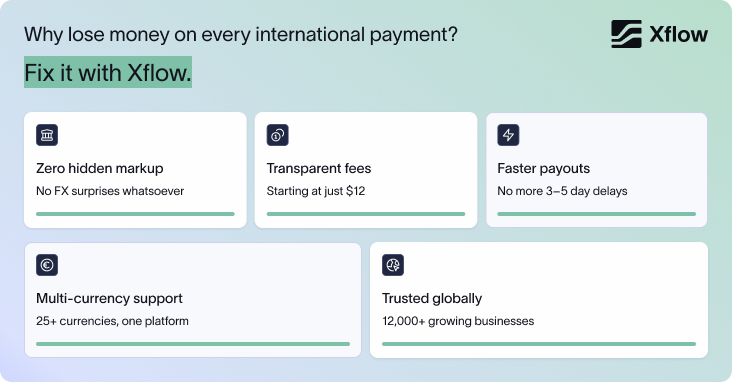
If your business is looking to increase its reach beyond India, Xflow is the solution. Xflow provides the secure infrastructure your organization needs to receive international payments while continuing compliance and speed. Our platform presents transparent pricing, next-day settlements, AI-powered FX insights, multi-currency transactions, and much more. Its FX AI Analyst tool also helps you track and forecast FX rates, so you convert at the best possible time.
Go to Xflow’s website today to learn more!
Frequently asked questions
Stablecoins are digital assets backed by a blockchain. They enable speedy, more cost-effective payment settlements around the clock. On the other hand, SWIFT is a banking network that uses traditional channels to settle payments. These are generally more costly and time-consuming.
Stablecoins are faster for cross-border payments since they bypass traditional banking channels, have fewer intermediaries, and are carried out digitally on the blockchain.
The transaction fees for stablecoins are considerably less than those levied in SWIFT networks. This is because stablecoin transactions have fewer intermediaries.
Yes, stablecoins are often more transparent than SWIFT transfers. They are carried out on the blockchain, which records each transaction and serves as a permanent ledger and audit trail.
No, stablecoins cannot currently replace SWIFT in international banking. While they are being used more often, they are still not centralized, fully regulated, or stable. SWIFT networks are also more widely established and span more than 200 countries, while stablecoins are not yet so widely used.
Stablecoins run the risk of depegging (or losing their value), and do not offer the same protections as traditional banks. This comprises regular examinations and liquidity buffers. SWIFT is also subject to regular cyberattacks and fraudulent transactions.
SWIFT is subject to harsher regulations than stablecoins. For example, the network must adhere to the CSP Framework (Customer Security Programme). Some controls under this system include mandatory security controls like access control and vulnerability management, annual reporting of compliance status, and regular assessment of the effectiveness of controls.
The regulations for stablecoins vary broadly based on the region. For example, the US subjects stablecoins to the GENIUS Act, and in Europe, they must adhere to MiCA.
SWIFT and stablecoin can both be useful for businesses, but they will depend on what your organization is looking for. Currently, SWIFT is still used for more high-value transactions and traditional banking. Meanwhile, stablecoins are a faster and less costly alternative for supplier payments and other cross-border B2B payments.
Yes, SWIFT is currently working to integrate with blockchain and stablecoin technologies. In 2025, SWIFT announced it would be building a blockchain-based ledger to allow for 24/7 international payment settlements, and is collaborating with over 30 financial institutions for the same.
Stablecoins currently come with the risk of losing their value (called depegging), as well as regulatory and compliance risks. Additionally, investors must rely on the issuer's integrity regarding honesty and reserve composition.
While stablecoins are not yet accepted as widely as SWIFT, they are being increasingly used in international payments and may soon change the face of cross-border transactions.
Compared to SWIFT, stablecoins are able to settle payments faster (in a matter of minutes) instead of in hours or days. They are also less costly, since they cut out most intermediaries.
Banks act as the intermediaries for transactions carried out on the SWIFT network. However, stablecoins do not rely on banks for conducting and settling payments.
Stablecoins may depeg, or lose their value compared to the currency they are pegged to. This can inhibit the user’s ability to make payments and carry out transactions. Additionally, it affects the cash flow and liquidity of the business.
Stablecoins outdo traditional banks in terms of speed and fees, and could change how organizations transact globally. However, networks like SWIFT have been employing blockchain technology as well, focusing on tokenization, faster settlements, and more.