Introduction
If you’re exporting goods or services, every transaction you make needs to be properly recorded, tracked, and linked to your payments. That’s where export declarations come in - they ensure your exports are not just completed, but compliant.
And this is becoming relevant for more than just traditional exporters. It should be noted that from October 2026 onwards, freelancers and service exporters are also required to fill out export declarations, making compliance a more relevant issue for many more people.
In this guide, you'll learn what an Export Declaration Form (EDF) is, the different types based on format, shipment, and export nature, and when filing is required. You'll also discover who needs to file, the step-by-step process for goods and services, key documents required, regulatory authorities involved, and common mistakes to avoid as an Indian exporter.
Key Takeaways
- Filing an Export Declaration Form (EDF) correctly helps Indian exporters stay FEMA-compliant, unlock DGFT incentives like RoDTEP, claim GST refunds, and avoid penalties that can reach 3x the export value.
- Goods exports are declared via the Shipping Bill on ICEGATE; service exports are declared via SOFTEX through STPI or SEZ authorities.
- From October 2026, freelancers and service exporters are brought under the formal EDF framework — making compliance relevant for a much wider group.
- Without a valid EDF, EDPMS entries stay open, no e-BRC is generated, and export incentive claims are blocked.
- Platforms like Xflow auto-generate e-FIRA and help reconcile inward remittances to EDF entries, simplifying EDPMS closure.
What is an export declaration form?
The Export Declaration Form (EDF) is an official form used to inform about the nature of the export of goods and services out of the country. This form serves as an official means of documenting your transaction by recording the item(s) being exported, your customer, and the value of the transaction.
The export declaration ensures that:
- Your export details are accurately reported
- Your foreign exchange earnings are properly tracked
- You receive payments in line with guidelines set by the Reserve Bank of India (RBI)
Put simply, the Export Declaration Form is what connects your export to the larger regulatory system. It ensures your transaction is recorded correctly, your payments are traceable, and your exports move forward without compliance issues.
What are the types of export declaration forms?
Export declarations aren’t a single fixed form. They vary based on how and what you’re exporting, and are usually classified by format, purpose, or type of export.
Based on format: Electronic vs Paper
The majority of export declarations currently happen electronically via government websites to facilitate an efficient system.
Before that, exporters would have to manually fill out declarations that would be presented at ports or customhouses.
Based on shipment type: General vs Specialised
- General export declarations - These are standard forms used for routine commercial exports. They include basic shipment details like product description, value, and destination.
- Commodity-specific declarations - There may be special declarations needed for certain kinds of goods, such as those that are regulated, chemical or military.
Based on nature of export: Goods vs Services
- Goods exports - For physical shipments, export declarations are handled through customs documentation systems. These declarations include shipment details, classification, and valuation, and are submitted before goods are exported.
- Service exports - Since there’s no physical movement of goods, service exports are declared through banking and regulatory reporting systems. These help track foreign exchange inflows and ensure compliance with regulations under FEMA and RBI.
Country-specific systems
Export declaration formats also differ by country. For example:
- The US uses Electronic Export Information (EEI)
- India relies on customs and banking-linked systems for goods and services
Each system ensures proper registration and valuation of exports according to the local rules and regulations.
What is the purpose of an export declaration form?
The EDF is required so the RBI can track exports and ensure foreign exchange earnings are brought back to India, as mandated under FEMA.
Without an EDF, there’s no EDPMS entry, which means you won’t get an eBRC, making you ineligible for export benefits like RoDTEP or duty drawbacks.
Banks also rely on the EDF to verify incoming payments. If it’s missing or incorrect, entries remain open, leading to notices, compliance issues, and even penalties of up to three times the export value. It helps you:
- Track export volumes and values - Keep precise documentation on exports and their declared value.
- Ensure foreign currency realization - Monitor that payments are received within the timelines set by the Reserve Bank of India (RBI).
- Prevent illegal or unreported exports - Take care not to make errors and inconsistencies during the process.
- Adhere to trade regulations - Match your exports to the regulations and avoid legal problems.
When is export declaration form required?
Export declarations are required before shipment, after invoicing, and during foreign exchange tracking. In short, wherever your export needs to be recorded and verified.
- At the time of exporting goods (before shipment clearance) - If you’re exporting physical goods, the declaration is made through the Shipping Bill before your shipment is cleared by customs. Without this step, your goods won’t receive the Let Export Order (LEO), which is mandatory for them to leave the country.
- When exporting services (after invoicing, for reporting) - For service exports, like software or IT services, the declaration usually happens after you raise an invoice. You’ll report the transaction through forms like SOFTEX to ensure the export value is certified and recorded.
- For most cross-border transactions involving foreign exchange - Any transaction in which you’re earning in a foreign currency generally requires a declaration. This ensures that the inflow is tracked and realized within the timelines set by the Reserve Bank of India (RBI).
- When required by banks for payment processing and reconciliation - Inward remittance from your bank could use information about your export declaration (shipping bill/SOFTEX) for processing and matching the payment to that particular export transaction.
- For compliance, auditing, and reporting purposes - Apart from the actual filing, the export declaration is one of the documents you will need for compliance purposes, auditors, or export benefits claims.
To choose between the two, see softex vs shipping bill.
Who needs to file export declaration form?
The filing of export declarations will depend on the manner by which you are exporting as well as who is dealing with your export process. Chances are, in most instances, either you or your duly authorized agent will be doing this.
- Exporters (individuals or businesses)
In case you are dealing with the exports of goods and services yourself, you will have the main responsibility of making sure that the export declaration has been filled properly and within the specified period.
- Authorized representatives (like Customs House Agents)
Customs House Agents (CHAs) or logistics partners may handle documentation and filing on your behalf. Even then, the responsibility for accuracy still ultimately rests on you.
- Service exporters (for SOFTEX filings)
If you are exporting services, especially IT or software, you are required to file declarations through mechanisms like the SOFTEX form, often via designated authorities such as STPI or SEZ units.
What key details are included in an export declaration form?
The Export Declaration Form serves as the sole document recording all the important information pertaining to the export process:
- Details of the exporter and importer - The personal information such as names and addresses of the two individuals would help identify the person involved in the exportation of goods and the one receiving them.
- Description of goods/services - This refers to the description of what you will export, whether it be tangible items like products or intangible items like software solutions.
- Invoice value and currency - The value of the export in monetary terms and its currency. This information is important for keeping track of payments and ensuring that foreign exchange transactions are recorded.
- Quantity and HS code (for goods) - In the case of goods, the form provides information on the quantity and Harmonized System code. This is essential for classifying products for customs clearance purposes.
- Country of destination - It is important for trade reporting, compliance checks, and statistical tracking of export flows.
- Payment terms and method - Details on how and when the exporter will be paid, such as advance payment, credit terms, or letter of credit, help link the declaration to actual foreign exchange realization.
What documents are required for an export declaration?
If you want to have a smooth process while making an export declaration, then it’s best to prepare some additional documentation to back up your declaration.
Here’s what you will require:
- Import Export Code (IEC)
The IEC is a 10-digit code issued by the DGFT that acts as your license to import or export from India. Linked to your PAN, it’s required for customs clearance and processing international shipments.
- Commercial invoice
This is the core document that shows what you’re exporting, the value of the transaction, and the terms of sale between you and the buyer.
- Packing list (for goods)
It gives an item-by-item description of how goods have been packed to help customs confirm what’s being exported during clearance.
- Purchase order or contract
Serves as proof of the agreement reached between you and the buyer concerning the exporting process.
- Shipping bill (for goods exports)
This is one of the most important documents when exporting goods, and it is necessary for shipment clearance.
- SOFTEX form (for services)
Used when you’re exporting services such as software or IT-enabled solutions, helping certify and report the export value.
- Bank details and AD code
Your bank account details and Authorised Dealer (AD) code are required to link export proceeds with your banking channel for foreign exchange tracking and reconciliation.
How do you file an export declaration form?
The export declaration form can be filed differently based on whether goods or services are being exported.
For goods
There is an order of processes to follow in exporting the physical items, and these include:
- Prepare the shipping particulars - This entails collecting all the necessary particulars of the products including their names, HS codes, number of items, price, consignee, and mode of transport.
- File shipping bill electronically via ICEGATE - It needs to be filed online using ICEGATE portal. This will act as declaration of export of goods, and this is an important step towards customs clearance.
- Upload documents using e-Sanchit - Your supporting documents like bills of lading, invoices, and packing list can be uploaded electronically using e-Sanchit, eliminating the need for paper-based documents.
- Document verification/physical inspection by customs, if necessary - Customs may perform verification on your document(s)/inspection of the goods physically. This is done to confirm that your documents and your exports are authentic and legal.
- Receive Let Export Order (LEO) - After the approval process, you will receive a Let Export Order (LEO) from the customs department.
- Shipment is cleared and exported - After the successful verification, the customs authorities grant you LEO. This is very important, as without this LEO, you cannot export.
For services
Service exports, such as IT, consulting, or software services, follow a reporting and certification-based process instead of physical clearance:
- Raise export invoice - First you will need to make an invoice describing the service, client data, amount, and other details of the payment. This becomes the base document for reporting the export.
- Submit SOFTEX form via designated authority (STPI/SEZ, where applicable) - The SOFTEX form is submitted to authorized bodies like Software Technology Parks of India (STPI) or Special Economic Zones (SEZ) units for validation of service exports.
- Certification of export value - The authority examines the value of the exports and makes sure that this value corresponds with the invoice.
- Submit to bank for foreign exchange tracking - Once certified, the details are shared with your bank to link incoming foreign currency payments with the declared export transaction. This step is crucial for foreign exchange compliance under RBI guidelines.
What is the role of customs and regulatory authorities in export declarations?
Being an exporter, the flow of your transaction involves dealing with certain authorities:
- Reserve Bank of India (RBI)
The RBI looks at the financial side of your export. This will ensure that your foreign exchange payments are made in accordance with the stipulated deadlines. In other words, it will monitor if you are getting your money back for your exports.
- Directorate General of Foreign Trade (DGFT)
The DGFT sets the rules of the game for exports. From policy guidelines to documentation requirements and export benefits, it defines how exports should be carried out in India.
- Indian customs
Customs is what you deal with at the physical shipment stage. After checking, you receive the Let Export Order (LEO), which authorises the export of your goods. Without this approval, the shipment cannot go ahead.
What are the compliance and legal requirements for export declarations?
These are some of the important things you should take into consideration:
- Declare accurate export value
It is essential for you to state the proper value of your products in the export documentation. The figure must be identical to the amount stated on your invoices and supporting papers. An inconsistency may cause your application to be delayed or rejected entirely.
- Realize foreign exchange within prescribed timelines
Export earnings must be received in foreign currency within the timelines set under India’s foreign trade and forex regulations (typically governed under FEMA guidelines). Delays in payment realization can lead to compliance flags with your bank or regulatory authorities, and may require justification or extensions in some cases.
- Maintain documentation for audits and verification
It is necessary that you retain all the documents related to export activities, which include invoices, shipping receipts, SOFTEX documents, contracts, and bank realizations. This is because they can be required at any point in time for an audit conducted by various authorities.
- Follow FEMA guidelines
India’s exports come under the provisions of the Foreign Exchange Management Act (FEMA). The rules provide for the regulation of receipt, reporting, and reconciliation of payments through authorised dealer (AD) banks to ensure proper monitoring of foreign exchange movements by the Reserve Bank of India (RBI).
- Ensure consistency across all export documents
One often overlooked requirement is consistency, your invoice, shipping bill, bank records, and declaration should all match. Even small differences in value, description, or timing can trigger compliance checks.
- Regulatory inspection/audits may occur
These could come from entities such as customs, DGFT, or your bank to examine your exports. It is easier if you have all your papers in order.
What are common mistakes to avoid when filing an export declaration?
Usually, most issues that cause delays in exports occur due to minor mistakes. They're very easy to avoid once you know about them.
Some common ones include:
- Incorrect invoice value
Even a small mismatch between your invoice and export declaration can create confusion and slow things down. Everything needs to match exactly.
- Mismatch between documents
All of your invoices, shipping notes, packing lists, and contracts must be identical. Any discrepancies may lead to unnecessary verifications.
- Missing HS codes (for goods)
HS codes are important for classifying your products correctly. If they’re missing or wrong, customs clearance can get stuck or delayed.
- Delayed SOFTEX filing (for services)
If you’re in service exports, waiting too long to file SOFTEX can delay certification and also slow down your payment tracking with the bank.
- Not linking export to bank realization
In case your export transaction is not associated with the receipt, then it may cause problems for you later on.
- Small inconsistencies across documents
In some cases, even a misspelling of your name, an inaccurate date, or different formats might lead to unneeded issues.
What are the penalties for non-compliance with export declarations?
Compliance when exporting assists in ensuring that all your transactions are accounted for. Lack of compliance can affect the payment process in many ways.
Here’s what non-compliance can result in:
- Monetary penalties
As per FEMA, fines could be as high as three times the value involved in the violation when the value can be determined, or a maximum fine of ₹2 lakh, while in ongoing offenses, a daily fine of ₹5,000 could also be levied until the act of non-compliance is rectified.
- Delays in payment realization
Banks may hold or delay your foreign currency receipts if export documentation or declarations don’t match. This can affect your cash flow until all differences are sorted out and everything is rectified.
- Higher scrutiny by the regulatory authorities
A discrepancy may result in more investigation by the customs authority, Authorised Dealer (AD), or even the Reserve Bank of India. This usually means more documentation requests and longer processing cycles.
- Suspension or restriction of export benefits (in severe cases)
If there is consistent violation of rules, exporters could be penalized through withholding or limiting of export concessions.
Conclusion
Export declaration, when done right, helps you achieve:
- Faster customs clearances
- Smoother and more predictable payment cycles
- Fewer compliance issues and follow-ups
But in practice, the challenge isn’t understanding its importance, it’s managing the process consistently without slowing down your business operations.
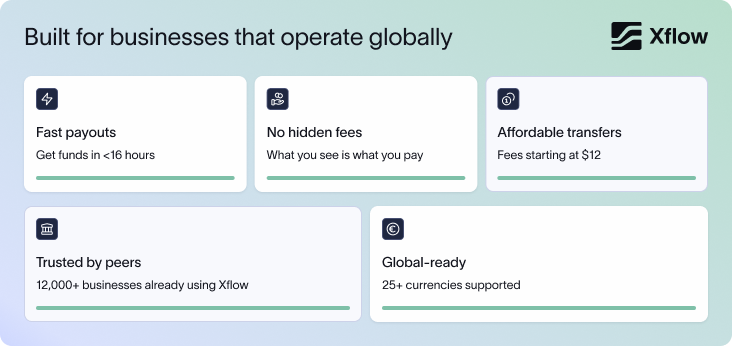
That’s where Xflow steps in. You can easily collect foreign payments, automatically reconcile those payments against your invoices, and track the entire process in real-time. Compliance and reporting built into the system reduce manual work.
Its receiving accounts handle that foreign collection directly, settling at the mid-market rate with automated eFIRA.
Growth shouldn’t come with more compliance headaches.
Sign up with Xflow today and make export compliance effortless and easy to manage.
Frequently asked questions
An Export Declaration Form (EDF) is an official document used to report export details to regulatory authorities for compliance and foreign exchange tracking purposes.
Yes, export declaration is mandatory in most cases. Goods exports are declared through a shipping bill, while service exports are reported through SOFTEX or similar prescribed forms.
The exporters or their duly appointed agents, including CHAs or other service providers, have to fill in the export declaration form.
These details include the name of exporter, buyer, invoice value, commodity description, destination country, and mode of payment.
Export declarations of goods are processed electronically via ICEGATE in India, whereas service exports are done via SOFTEX filings in case of service exports, authorized by authorities like STPI/SEZ unit.
Export declaration involves a number of documents such as commercial invoice, packing list (where applicable in case of goods), shipping bill (where applicable in case of goods), SOFTEX documentation (where applicable in case of service exports).
Customs will examine all necessary documents, if needed will carry out inspection, and clear export declaration using the Let Export Order (LEO) for goods exportations.
Yes, service exports are required to be declared, usually through SOFTEX forms or equivalent reporting mechanisms.
Export declaration non-filing may result in sanctions or problems in bank document processing as well as other compliance-related issues.
Yes, export declaration filing can be carried out online using ICEGATE or similar portals, especially for SOFTEX in case of service exportations.
While shipping bill is one of export declaration types in case of goods exportation, export declaration covers exportation of goods as well as services.
Before 2013, exporters used different forms based on the type of export—GR forms for goods and PP forms in certain cases. The EDF was introduced to bring these into a more standardised format.
The timeline depends on the mode of transport and must be followed before the shipment leaves India:
- Inland waterways/roadways: At least 1 hour before departure
- Sea: At least 2 hours before departure
- Air: At least 30 minutes before departure
- Rail: At least 1 hour before reaching the exit point
Yes, but mistakes in export declaration forms can cause processing delays and may need authorization from the concerned authorities.
Yes, export declaration data is often linked with GST filings and is used to support export reporting and claims such as refunds or exemptions.