Introduction
$820.93 billion.
This was the total value of India’s exports for FY 2024-25.
But what most of us ignore is that:
- $437.42 billion was from physical goods
- $383.51 billion came from services like software and IT
Two very different types of exports. And naturally, two very different compliance requirements.
And this is where things split between SOFTEX and shipping bills.
In this blog, we will understand the nuances of both SOFTEX and shipping bill, their differences, and when they are needed.
Key Takeaways
- Understanding SOFTEX vs Shipping Bill helps Indian exporters file the correct declaration, stay FEMA/customs compliant, and avoid delays in foreign exchange realisation or cargo clearance.
- SOFTEX is used for software and IT/ITES service exports; Shipping Bill is used for physical goods exports.
- SOFTEX is filed with RBI through STPI or SEZ authorities within 30 days of invoice; Shipping Bill is filed on ICEGATE under customs/DGFT.
- SOFTEX is applicable for software service exports, with specific thresholds and simplifications for low-value invoices as per RBI rules.
- Platforms like Xflow auto-generate e-FIRA and help match SOFTEX/Shipping Bill with IRM for EDPMS closure.
In this guide, you'll learn exactly what SOFTEX and Shipping Bill are, when to use each, which regulatory bodies oversee them, and the step-by-step filing process. You'll also discover documentation requirements, compliance timelines, common mistakes to avoid, and how to match these declarations with foreign inward remittances for smooth EDPMS closure.
SOFTEX has been replaced: what this means for this comparison
What changed: the Reserve Bank of India officially retired the SOFTEX form on 13 January 2026 under notification FEMA 23(R)/2026-RB. A single, unified Export Declaration Form (EDF) now covers goods, services and software exports together, replacing the separate SOFTEX/GR/SDF forms, with full transition by 1 October 2026. STPI certification is no longer mandatory on its own — authorised dealer banks are now recognised as a "Specified Authority" alongside STPI, and transaction-level filings are moving to a monthly consolidated model. If you are setting up export compliance today, confirm with your bank or STPI whether you should file under the new EDF process rather than the retired SOFTEX system described below, which remains here for historical and transition-period context.
What is a SOFTEX form?
The SOFTEX form is a declaration you file when you export software or IT-enabled services from India. If you are a service exporter, this is one of the key compliance documents that helps formally record your cross-border transactions.
In simple terms, it is your official confirmation that you have provided a software or IT service to a client outside India, along with the details of that export.
This form is filed with the Reserve Bank of India (RBI), usually through authorized agencies or Special Economic Zone (SEZ) authorities, depending on your business structure.
What is the purpose of the SOFTEX form?
If you are exporting services, the SOFTEX form helps ensure that your transactions are properly recorded and tracked. It plays a key role in making your export compliant and transparent.
It helps you:
- Declare your software and IT-enabled service exports
- Ensure your foreign exchange earnings are correctly recorded
- Support RBI in tracking service export inflows
- Validate your export proceeds for regulatory compliance
What is a shipping bill?
A shipping bill is a mandatory document you need when you export physical goods from India. If you are sending products outside the country, this is one of the key documents that allows your shipment to legally move through customs.
In simple terms, it is your official export clearance document for goods.
This document is filed with customs authorities and processed through the Directorate General of Foreign Trade (DGFT) ecosystem, typically via the ICEGATE portal.
Each line of goods on a shipping bill is classified using an HSN code; if you are unsure how these work, read what is an hsn code.
What is the purpose of a shipping bill?
A shipping bill:
- Acts as legal permission to export goods from India
- Helps customs authorities clear your shipment
- Tracks the movement of export cargo
- Supports GST refunds and export-related incentives, where applicable
What are the key differences between SOFTEX and Shipping Bill?
When we talk about SOFTEX vs shipping bill, the core difference comes down to what you are exporting: services or physical goods. Everything else flows from that basic distinction:
1. Type of export
The first and most important difference is the nature of the export itself.
SOFTEX form is used when you are exporting services, especially software, IT, or IT-enabled services. There is no physical movement of goods, only digital delivery of work.
Shipping bill, on the other hand, applies when you are exporting physical goods that are shipped outside India through air, sea, or courier.
2. Filing authority and system
Both documents are filed through different regulatory systems.
SOFTEX filings are handled under the framework of the Reserve Bank of India (RBI), usually through authorized agencies or SEZ authorities, depending on the exporter’s setup.
The shipping bill is managed within the customs system under the DGFT framework and normally via the ICEGATE portal.
3. Purpose of the document
The purpose also differs significantly.
SOFTEX is used to track and validate foreign exchange earned from service exports. It ensures that software and IT service exports are properly recorded in India’s financial system.
A shipping bill is used to clear goods for export through customs. It acts as legal authorization for your shipment to leave the country.
4. Medium of export
This is where the contrast becomes very practical.
With SOFTEX, the export is completely digital. You are delivering services like coding, IT support, or software development.
With a shipping bill, the export is physical, meaning actual products are packed, shipped, and transported across borders.
5. Output or outcome
Finally, the end result of each document is different.
SOFTEX results in a service export certification, which confirms your foreign service earnings are officially recorded.
The shipping bill will generate a customs clearance certificate that will enable your shipment to leave India physically.
How do SOFTEX and Shipping Bill compare side by side?
For better clarity, let’s put both terms in a comparison table.
| Aspect | SOFTEX | Shipping bill |
|---|---|---|
| Export category | Services | Goods |
| Regulatory body | Reserve Bank of India | Directorate General of Foreign Trade + Customs |
| Filing system | SEZ/Authorized portals | ICEGATE |
| Currency tracking | Yes (foreign inflows) | Indirect (via invoice & customs data) |
| Physical movement | Not applicable | Mandatory |
| Usage in GST refunds | Limited | Commonly used |
When do you need SOFTEX vs shipping bill?
Understanding when to use SOFTEX vs shipping bill becomes much easier when you link it directly to the nature of your business activity, what you are exporting and how it is delivered.
Use SOFTEX when:
You will need a SOFTEX form if your export is service-based, especially in the digital or IT space.
This typically applies when:
- You are exporting software, IT services, or IT-enabled services from India.
- You are receiving payments from overseas clients for digital work delivered online.
- You operate through a structured setup such as an SEZ unit or registered export entity.
- Your export does not involve any physical shipment of goods, only service delivery.
Use a shipping bill when:
A shipping bill is required when your export involves the physical movement of goods across borders.
You will need it when:
- You are physically shipping goods outside India through air, sea, or courier.
- Your business involves manufacturing, trading, or exporting physical products.
- You run an e-commerce export business shipping products internationally.
- You need customs clearance for cargo before it leaves India.
Which regulatory authorities oversee SOFTEX and Shipping Bill?
When it comes to SOFTEX vs shipping bill, one of the key differences lies in the regulatory ecosystem behind each document. Each is controlled by a different governing authority based on whether services or goods are exported.
Reserve Bank of India (RBI)
The Reserve Bank of India (RBI) is an important regulatory agency in the case of service exports, where there are foreign currency exchanges taking place.
If one exports software and completes the SOFTEX form, then the RBI will make sure that these export transactions comply with India's foreign exchange policies.
RBI’s key responsibilities include:
- Monitoring export of services, especially software and IT-enabled exports
- Tracking and validating foreign currency earnings received from overseas clients
- Ensuring compliance with FEMA (Foreign Exchange Management Act) regulations
- Maintaining proper reporting of service export inflows through SOFTEX filings
Directorate General of Foreign Trade (DGFT)
The Directorate General of Foreign Trade (DGFT) controls all export activities and establishes the country's complete export and import regulations.
The customs department works with DGFT to ensure proper management of export operations through their collaboration on shipping bills.
DGFT has the following main responsibilities:
- Develops and executes export and import regulations for India.
- Facilitates trade through simplified compliance and documentation systems
- Ensures integration between exporters, customs authorities, and ICEGATE for shipping documentation.
- Supports export procedures that enable clearance of goods for international shipment
Both authorities work in parallel but operate in completely different export domains, ensuring that India’s trade, both services and goods, is properly regulated and documented.
What documents are required for SOFTEX and Shipping Bill?
Here’s what you typically need for each type of export:
SOFTEX
If you are exporting software or IT-enabled services, SOFTEX filing is mainly focused on proving that the service was delivered and that the foreign payment is linked to it. Typically, you will need:
- Invoice for services: This captures what service you provided, the value, and client details.
- Client contract or agreement: Helps establish the terms of engagement and confirms the export relationship.
- Payment proof (bank realization details): Shows that foreign currency has been received or is expected through official banking channels.
- Export declaration details: Basic information about the service export transaction.
- SEZ approval (if applicable): Required if your unit operates under an SEZ framework.
Shipping bill
The procedure for exporting physical goods is somewhat more complicated, as it includes clearance from customs authorities as well as the transportation of the cargo.
Generally, you will require:
- Commercial invoice: It gives details about the goods, the price of the goods, and details of the buyer for valuation purposes in the customs department.
- Packing list: It contains information about the packing details of goods, along with quantity and packaging arrangement.
- Purchase Order (PO): It indicates the buyer’s readiness to purchase the product(s).
- Export license (when needed): It is compulsory when exporting restricted products.
- Import Export Code (IEC): All exporters of goods should get IEC numbers allotted.
- Shipping instructions: It offers details on how the goods are shipped.
How do you file a SOFTEX form?
If you are exporting software or information technology-enabled services, here are the steps that you will usually follow:
1. Register with SEZ or authorized agency
The first step is to ensure your business is properly registered with a Special Economic Zone (SEZ) unit or an authorized agency, depending on your export setup. This registration is what allows you to file SOFTEX declarations under the approved system.
2. Prepare export invoice and contract
Next, you prepare the basic commercial documents that support your service export. This usually includes your invoice for services and the client agreement or contract, which clearly defines the scope of work and value of services provided.
3. File SOFTEX declaration electronically
Once your documents are ready, you file the SOFTEX form electronically through the designated SEZ or authorized portal. This is where you officially declare the details of your software or IT service export.
4. Submit supporting documents
You need to attach all the supporting documents along with your SOFTEX filing. These may include your invoices, contract papers, or other information related to your exports that are needed for validation purposes.
5. Get approval from authorities
Once your SOFTEX filing has been received, it will be reviewed by the responsible authority. Once everything is approved, the declaration will be accepted.
6. Match with foreign remittance received
Finally, your SOFTEX filing is linked with the actual foreign currency payment received through banking channels. This reconciliation is important to ensure that the declared export matches the inflow of funds.
How do you file a shipping bill?
The shipping bill is an essential element of shipping physical products. It makes sure that your consignment is registered and cleared by the customs authority before leaving India. After you get the hang of the system, it becomes systematic rather than complicated.
1. Create export invoice
The first step involves creating an invoice. The invoice provides details regarding the type of goods, their quantity, price, the name of the recipient, and the conditions of sales. It acts as the base document for customs valuation.
2. Book shipment with freight forwarder
After creating the invoice, arrangements are made regarding shipping your products through a freight forwarder. This involves choosing the mode of transportation as well as arranging cargo for shipment abroad.
3. File shipping bill on ICEGATE
The next process is that of filing the shipping bill electronically through the ICEGATE portal, which is an electronic customs platform of DGFT regulations. This is where you officially declare your goods for export clearance.
4. Customs examination (if required)
Customs officials will inspect the cargo after its filing based on the type of cargo, paperwork, or risk assessment. This process will ensure that the declared cargo is the actual cargo.
5. Goods cleared for export
Once verification is complete, customs grants clearance. At this stage, your goods are legally approved to leave the country and proceed for international shipping.
6. Shipping bill number used for tracking
After clearance, a shipping bill number is generated, which becomes your primary reference for tracking the export transaction. It is also used for compliance, refunds, and future documentation needs.
What are the compliance and reporting requirements for SOFTEX and Shipping Bill?
SOFTEX:
SOFTEX forms are compulsory for all software and IT/ITES exports. This form is used to declare, verify, and report the export invoice for services to the RBI. It helps in determining the total export service value and its corresponding foreign exchange realization.
What you need to know:
- RBI/FEMA regulations: Filing of SOFTEX is compulsory as per FEMA regulations for declaring software and IT/ITES exports.
- Timeline: You’re expected to file the SOFTEX form within 30 days of the invoice date.
- Applicability: The regulation applies to all software and other IT/ITES export firms, irrespective of their size.
- Process for submission: The forms need to be submitted via various authorities, such as STPI or SEZs, and reported to the RBI.
- Details required: Simple information, such as the value of the invoice, client, services offered, and currency needs to be provided in these forms.
- Payment tracking: Helps in making sure that export payments are made within the stipulated period (generally nine months).
- Consequences of non-compliance: Non-conformity may result in penalties and late payments, among others.
Shipping bill:
For goods exports, filing a shipping bill is a mandatory compliance requirement under customs regulations. This is the means through which exports are declared, authenticated, and released for exportation.
What you need to know:
- Electronic declaration: The shipment bill is required to be submitted in electronic format on the ICEGATE portal.
- Custom inspections: Customs authorities may conduct inspections prior to releasing the goods to issue a Let Export Order (LEO).
- Applicability: All physical exports are subject to the use of shipping bill.
- Filing: It is filed electronically using the ICEGATE portal.
- Information required: Relevant information, such as product details, quantity, value, HS Code, destination, etc., is mandatory.
- Documents required: Documents include commercial invoice, packing list, bill of lading/airway bill, export license, etc.
- Consequences of non-compliance: Failure to submit the details on time might result in customs delays or queries.
What are common mistakes to avoid with SOFTEX and Shipping Bill?
As far as export compliance is concerned, whether it is SOFTEX or shipping Bill, even small mistakes will result in delays, refusal, and more queries. These kinds of mistakes are generally easy to avoid if one knows what to look out for.
1. Confusing SOFTEX with shipping bill
The first mistake people make when filing either of these forms is confusion. SOFTEX applies to service exports like software or IT-enabled work, while a shipping bill is strictly for physical goods exports.
Submitting the wrong documentation for the wrong kind of export will cause complications and slow down the process.
2. Missing or incorrect invoice details
Export documentation is heavily dependent on accurate invoices. Small discrepancies like wrong information regarding the client's name, value, and service can result in errors when performing the verification.
The invoice data serves as the basis for validating services and goods exports.
3. Delayed filing after export completion
Timing is important for both SOFTEX and shipping bills. Late submissions could result in discrepancies, particularly in verifying export details against payments and customs documentation.
Sometimes, late submissions may need further explanation.
4. Not linking bank realization with SOFTEX
For service exports, SOFTEX filings must align with actual foreign currency receipts through banking channels. If bank realization details are not properly linked, it can lead to mismatches during compliance checks or audits.
5. Incorrect HS codes in shipping bill
When it comes to exports of goods, you need to apply proper Harmonized System codes to classify them. Inaccurate application of the HS codes will lead to customs issues or delays.
This is one of the most technical but important areas in shipping bill filing.
6. Ignoring SEZ or DGFT guidelines
Both SOFTEX and shipping bill processes are governed by specific regulatory frameworks. Ignoring SEZ requirements (for SOFTEX) or DGFT/customs guidelines (for shipping bill) can lead to non-compliance issues.
This includes missing documentation, incorrect filing formats, or not following prescribed timelines.
Conclusion
At the end of the day, the difference between SOFTEX and shipping bill comes down to one simple factor: what you’re exporting.
If it’s services, SOFTEX helps track your foreign earnings. If it’s physical goods, the shipping bill ensures your shipment clears customs.
Once you understand this distinction, export compliance becomes far more straightforward. But in practice, managing everything, from foreign remittance tracking to documentation, IRM creation, eFIRA, and EDPMS closure, can still feel fragmented.
This is where having the right payment partner makes a difference.
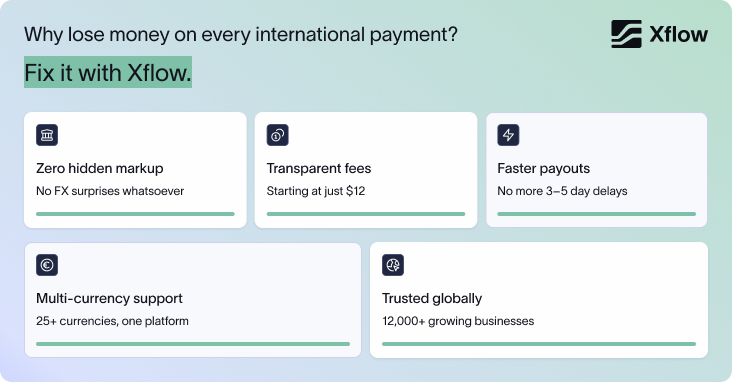
Xflow doesn’t just help you receive international payments; it handles the compliance layer alongside it. From providing Payment Advice for inward remittances to helping you match SOFTEX or shipping bills with IRM, and even free eFIRA generation and GST-related documentation, everything is built to work within RBI guidelines.
Whether you are exporting software or physical goods, Xflow’s receiving accounts bring every inward payment and its matching compliance record into one place.
So now, you can manage payments, tracking, and compliance in one flow, exactly the way cross-border transactions are meant to work.
Let’s make cross-border payments feel effortless. Sign up with Xflow today.
Frequently asked questions
SOFTEX is used for service exports, especially software and IT-enabled services, where no physical goods are moved. A shipping bill is used for physical goods exports, where products are shipped outside India through customs clearance.
No. SOFTEX does not apply to goods exports. It is only meant for service-based exports like software, IT services, and digital delivery work.
No. A shipping bill is strictly for physical goods exports and is not used for services.
SOFTEX comes under the purview of the Reserve Bank of India (RBI), which operates through the SEZ or its approved system.
The shipping bills are created under the customs system through DGFT, using ICEGATE.
Yes, in most structured setups, especially SEZ-based or formally registered export units, SOFTEX filing is required for IT and software exports to ensure proper reporting of foreign exchange earnings.
RBI supervises SOFTEX reporting in order to make sure that earnings from the service export through foreign exchange are reported in compliance with FEMA guidelines.
DGFT handles India’s export/import policy regime and provides seamless coordination between exporters and customs procedures. For shipping bill handling, it facilitates document processing through ICEGATE and other such systems.
Yes. If your business exports both services and physical goods, you may need SOFTEX for service exports and a shipping bill for goods exports.
It depends on the export type:
- For SOFTEX: Invoices, service contracts, payment proof, and export declaration details.
- For shipping bill: Commercial invoice, packing list, IEC code, purchase order, and shipping instructions.
SOFTEX forms are filed through SEZ-authorized portals or designated filing systems linked to RBI compliance requirements, depending on your export setup.
A shipping bill is generated electronically through ICEGATE or customs broker systems during the export clearance process.
Failure to complete SOFTEX could result in non-conformity with foreign exchange rules and problems in auditing and reconciliation of export profits.
If a shipping bill is unavailable, exporting the goods will be difficult, and shipments may be delayed.
Freelancers should file SOFTEX if they follow any export mechanism, special economic zone, or export system where foreign remittances are involved.
Yes, SOFTEX may be revised, but the approval of the concerned authority must be sought along with justification.