Introduction
Business owners usually deal with several things together. Each has its own complexity.
Take invoices, for example. You have money coming in from customers and going out to suppliers. But this rarely happens at the same time. This can make it difficult to get a clear picture of your cash flow.
Net payment terms are one way you can bring some order to this. They tell customers exactly when payment is due after an invoice is sent. But beyond this, they can also shape:
- How do your customers perceive you?
- How often do they come back?
- How predictable is your income?
In this guide, you'll learn what net payment terms mean, the most common types (Net 15, 30, 60, 90, and discount terms), and how they differ from advance payments and credit cards. You'll also discover the pros and cons, impact on cash flow and working capital, how to set the right terms for your business, and best practices for managing them effectively.
Key Takeaways
- Net payment terms help businesses manage cash flow, strengthen client relationships, and win larger B2B orders by offering buyers a clear, agreed-upon window (15, 30, 60, or 90 days) to pay invoices.
- Net 30 is the most common standard; Net 60 and Net 90 suit larger or longer-cycle industries like construction and wholesale.
- Discount net terms like "2/10 Net 30" incentivise early payment and speed up collections.
- Cross-border net terms carry additional risk — currency fluctuations, slower banking rails, and regulatory timelines (like India's FEMA realisation rules) can extend effective payment windows.
- Platforms like Xflow shorten international payment cycles to 1 business day and auto-generate e-FIRA within 24 hours, keeping cross-border net terms manageable.
What are net payment terms?
Net payment terms are invoice conditions that tell a buyer how many days they have to pay after the invoice date. For example, "Net 30" means full payment is due within 30 days.
These terms are more common in B2B transactions. They give buyers some breathing room to arrange funds while giving sellers a clear expectation of when money will arrive. The timeline typically includes weekends and holidays unless the invoice says otherwise.
Common types of net payment terms
There are various types of net terms: Net15, Net30, Net60, Net90, discount net terms, and end-of-month terms.
1. Net 15, 30, 60, 90
These are used the most. The number simply tells the buyer how many days they have to pay from the invoice date. Net 30 terms are the most popular across industries. Net 60 and Net 90 are more common in larger transactions or industries with longer processing times.
Net 15 is less common but suits businesses that prefer faster turnaround.
2. Discount net terms
Some businesses offer a small discount as an incentive for paying early. A term like "2/10 Net 30" means the buyer gets a 2% discount if they pay within 10 days. If not, the full amount is due by day 30.
3. End-of-month terms
Here, payment is due a set number of days after the calendar month closes, rather than from the invoice date itself.
How do net payment terms work?
When you issue an invoice, the net payment term on it tells the buyer exactly when payment is due. This sounds simple. But the same terms don’t work for everyone.
For instance, a food and beverage business moves inventory fast and needs cash to keep up. Here, Net15 makes sense. But on the other hand, a construction supplier has fewer upfront costs and can afford to wait. Net 90 might work better for them.
The right terms depend on:
- Your industry
- Your cash flow needs
- Your relationship with the buyer
What are the key components of net payment terms?
Every net payment term includes a few key components. These include:
- Invoice date: This is the starting point. The payment timeline begins from the day the invoice is issued.
- Payment due date: Calculated from the invoice date, this is the deadline by which the buyer needs to pay.
- Credit terms: These explain how long the buyer has to pay and if there are any discounts for early payment.
- Payment terms: The full conditions of the agreement, including the net period and any penalties if payment comes in late.
Net payment terms vs advance payments
With advance payments, the buyer pays before you deliver the goods or service. It is common in manufacturing or service businesses where a significant amount of effort goes in upfront. Net payment terms work the other way. The buyer receives the invoice first and pays later, within the agreed number of days.
Here's how they differ:
| Factor | Advance payment | Net payment terms |
|---|---|---|
| Payment | Made before delivery or completion | Made after the invoice is issued |
| Common users | Manufacturing, custom orders, service businesses | B2B transactions across most industries |
| Cash flow impact | Immediate cash for the seller | Delayed cash for the seller |
| Risk | Higher for the buyer | Higher for the seller |
| Flexibility | Less flexible for the buyer | More flexible for the buyer |
Net payment terms vs credit cards
With net payment terms, the buyer gets a fixed time, usually 30, 60, or 90 days, to pay the invoice. There's usually no interest, though late fees may apply. Credit cards, on the other hand, process payment immediately. The buyer then repays the card issuer later. The seller also has to pay processing fees on every transaction.
Here's how they differ:
| Factor | Net payment terms | Credit cards |
|---|---|---|
| Payment due | 30, 60, or 90 days after invoice | Up to 30 days (grace period may apply) |
| Seller fees | None for domestic; fees apply for international | Processing fee (1.10-3.15%) + gateway fees |
| Common use | B2B transactions | B2B and B2C transactions |
| Flexibility | Negotiable between parties | Fixed by the card issuer |
What are the advantages of net payment terms?
Net payment terms offer benefits for both buyers and sellers. Here's how:
1. Easier access to credit
Getting credit from a bank involves strict checks, collateral, and lengthy applications. Net terms bypass that. Suppliers can extend credit through a simpler process, letting businesses get what they need without the wait.
2. Increased sales
Buyers who don't have to pay up front are more likely to place larger or more frequent orders.
3. Stronger customer relationships
Net payment terms make it easier for buyers to pay. This can strengthen trust and bring in repeat business.
4. Competitive advantage
Offering net terms, especially favourable ones, can help you win clients that competitors might not.
5. Predictable cash flow
A clear payment schedule makes it easier to plan your finances without having to keep following up on payments.
What are the disadvantages and risks of net payment terms?
Net payment terms are great for building a rapport with your buyers. But they're not without some downsides:
1. Delayed cash
The work is done, but the money is still on its way. If you’re low on cash, even a short delay can create pressure.
2. Late payment risk
Some clients will pay late. When that happens, it can disrupt your ability to manage expenses and pay vendors on time.
3. Accounting complexity
Handling several invoices with different timelines is not always simple. It requires steady tracking and effort to keep things in order.
Net payment terms in international trade
Net payment terms are simple when you're dealing with domestic buyers. Everyone uses the same currency and banking system.
But cross-border transactions are different.
When payments travel across countries, delays are common. Plus, different banking systems don't always talk to each other smoothly, and currency conversions add both cost and time to the process. This means a payment that should arrive within Net 30 can easily run late simply because of how international transfers work.
Then, there are your own outstanding bills to juggle. You might allow customers 30 days, but your supplier may only give you 15. When this happens across countries and currencies, even a short delay can affect your cash flow.
If you are the one exporting goods and extending credit to overseas buyers, it helps to understand export payment terms in the context of India's FEMA realisation timelines, since those rules can extend your effective collection window.
What is the impact of net payment terms on cash flow and working capital?
A clear payment schedule helps you plan your finances and cut down on follow-ups. But until the payment comes in, your cash is still tied up in what you have already delivered.
If a client pays late, it can create real problems. You may struggle to pay vendors, cover rent, or manage other expenses.
The same goes for working capital. You often need to pay your suppliers before your customers pay you. As your business grows, that gap grows too. More orders mean more upfront costs, while incoming payments continue to lag behind.
How to set net payment terms for your business?
There's no universal way to set net payment terms. The right terms depend on several factors, such as:
1. Your cash flow needs
If you need money coming in quickly, shorter terms like Net 15 or Net 30 make more sense. If you can afford to wait, longer terms give your customers more flexibility.
2. Your customer's financial health
For newer clients, shorter terms reduce your risk. For established ones with a solid payment history, longer terms are reasonable.
3. Industry norms
B2B suppliers commonly use Net 30 or Net 60. Construction businesses often run longer due to project size. It's worth knowing what's standard in your sector.
4. Negotiating power
The business with more leverage often sets the terms. If your product or service is not easy to replace, you have the upper hand.
What are some best practices for managing net terms?
Setting net terms is one thing. Managing them well is another. Here are some best practices that can help you stay on top of things:
Be clear from the start
Before you begin, ensure your client knows when to pay, any late fees involved, and how they can make the payment. Put it all in writing.
Give customers easy ways to pay
The more payment options you offer, like credit cards, bank transfers, or ACH, the fewer excuses there are for late payments.
Reward early payments
A small discount of 1% to 2% for paying ahead of the due date can go a long way in speeding up cash collection.
Automate the AR process
When you automate accounts receivable, you make fewer mistakes. It also helps you stay consistent with follow-ups without tracking every invoice yourself, and cuts down on manual invoice reconciliation, one of the more time-consuming parts of managing net terms at scale.
What are some common mistakes to avoid?
Net terms have their own pros and cons. However, certain mistakes can make them more stressful than they have to be:
Applying the same terms to every client
A client who always pays on time might earn a Net 60. One who regularly pays late should probably be on Net 15. Tailoring terms to each client's history keeps things fair and practical.
Ignoring your own cash flow
Setting terms without factoring in your average collection period is risky. If clients are slow to pay, overly generous terms can leave you short when you need funds most.
Treating every invoice the same
With larger invoices, offering longer terms can help. It shows you are being practical about the payment and helps maintain a good relationship without extra pressure.
Conclusion
Net payment terms can strengthen client relationships and bring more clarity to your cash flow. So, choose terms that suit both sides, be clear about expectations, and follow up consistently.
But if you deal with international clients, managing payment timelines can get more complex. That's where Xflow can help.
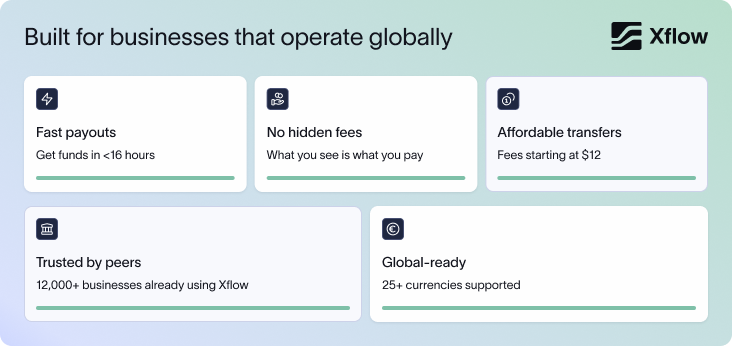
Xflow is built for freelancers, SMBs, and enterprises that receive foreign currency payments. It offers:
- Transparent pricing linked directly to mid-market rates.
- Fast settlements within 1 business day.
- Automatic eFIRA within 24 hours.
- Large payment collection on a single invoice.
- ISO 27001 and SOC 2 compliance.
Better rate. Better platform. Better choice.
Frequently asked questions
Net payment terms are the conditions on an invoice that tell the buyer how much time they have to make the payment.
Net 30 means the buyer has 30 days from the invoice date to make full payment.
Net 30 gives the buyer 30 days to pay from the invoice date; Net 60 extends this to 60 days. Both are due from invoice date, but Net 60 is more common in larger B2B transactions or longer-cycle industries like construction.
Yes, once the terms are agreed upon and written in a contract or invoice, they are legally binding.
Net terms delay when money comes into your account. Until payment arrives, your cash is tied up in goods or services already delivered.
Net payment terms are standard in B2B industries including manufacturing, wholesale distribution, professional services, IT/SaaS, construction, and logistics.
Yes, net terms can give small businesses an edge. They make it easier to attract clients who need flexibility, and they are simpler to set up than getting credit from a bank.
The buyer may face late fees or interest charges as specified in the invoice or contract. Persistent late payment can also trigger contract termination or legal recovery proceedings.
Yes, the business with more leverage usually sets the terms. This is often the one offering a product or service that is hard to replace.
Yes, net terms carry more risk for exporters. Cross-border payments face SWIFT delays, FX conversion timelines, and compliance checks, a Net 30 invoice can easily stretch to 45-60 days in practice. Indian exporters must also factor in the FEMA realisation timeline.
Start by clearly documenting your terms in contracts and invoices. Include the due date, late fees, and payment methods. Automating accounts receivable also helps ensure timely follow-ups.
Net terms refer specifically to the number of days a buyer has to pay after an invoice is issued. Credit terms are broader and cover the full payment agreement, including the payment window, any early payment discounts, and penalties for late payment.
Yes, a "2/10 Net 30" means the buyer gets a 2% discount if they pay within 10 days.
You can manage overdue invoices under net terms by tailoring terms to each client's payment history. Clients who pay late regularly should be moved to shorter terms, like Net 15.
Before you start, make sure your terms are clear and written down. Offer a few payment options. When setting terms, consider your cash flow, your client’s track record, and what’s common in your industry.